Programming Essentials in Python Section 1
What is Python
- Python is a popular, interpreted programming language.
- Created by Guido van Rossum and released in 1991.
- It is highly favored for rapid application development.
- The language features a simple, easy-to-learn, readable syntax that reduces program maintenance costs.
Uses of Python
- Data analysis and machine learning.
- Web development.
- Automation or scripting.
- Software testing and prototyping.
- Everyday tasks.
What Can Python Do
Python can:
- Build web applications on a server.
- Connect to databases, read, and modify files.
- Handle big data and perform complex mathematical operations.
- Be used for rapid prototyping.
Python Features and Advantages
Easy to Code
Python is a high-level language that is effortless to learn.Easy to Read
Python code is readable and looks like simple English words.Free and Open-Source
Python is developed under an OSI-approved open source license, making it completely free to use.Portable
Python is portable, allowing the same code to run on different machines.Object-Oriented and Procedure-Oriented
Python supports both object-oriented (focused on data and objects) and procedure-oriented (focused on reusable functions) programming paradigms.Robust Standard Library
Python offers a rich standard library, reducing the need for developers to write code from scratch for many functionalities.Support for GUI
Python provides support for GUIs (Graphical User Interfaces), enabling easy user interaction with applications.Dynamically Typed
Python is dynamically typed, meaning variable types are decided at runtime.
Many programming languages need to declare the type of the variable before runtime like C++ and Java.
Examples:
int x = 20; // In C++ type declaration is mandatoryx = 20 # No need to declare variable type in PythonExamples of Python
print("Hello, World!") # Output: Hello, World!
x = 5
y = 9
z = x + y # 5 + 9 = 14
print(z) # Output: 14
print(type(z)) # Output: <class 'int'>
print(type(type(z))) # Output: <class 'type'>
output: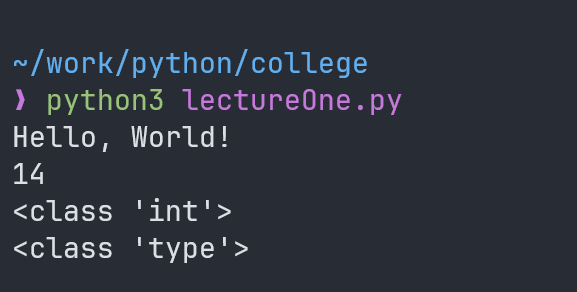
Python Uses Different IDEs
An Integrated Development Environment (IDE) is a software application that provides essential tools for software development, including:
- A source code editor
- Build automation tools
- A debugger
- A compiler or interpreter
It streamlines the development process by integrating these tools into a single interface for programmers.
Examples include:

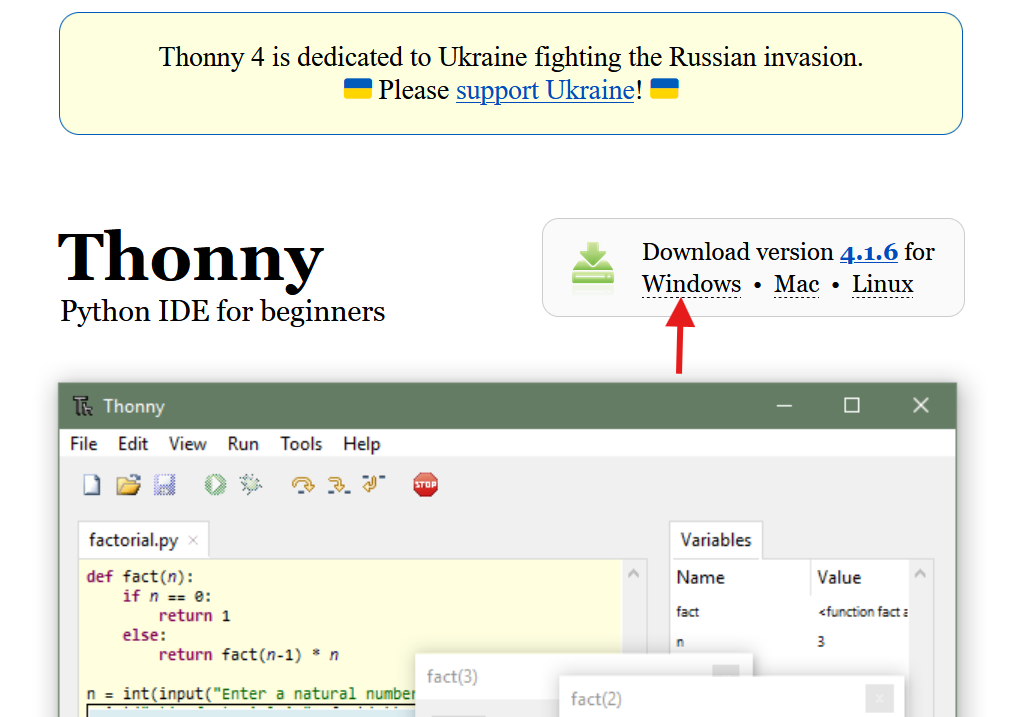
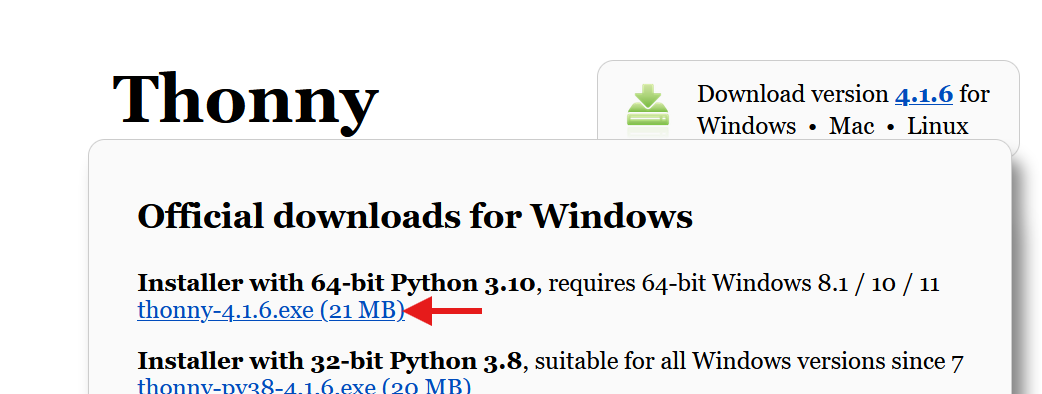
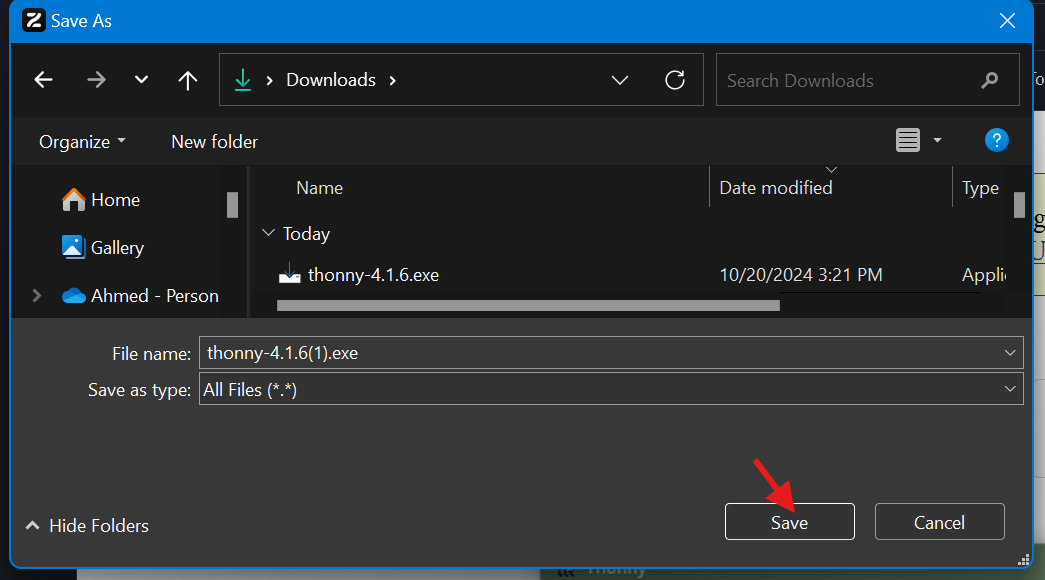
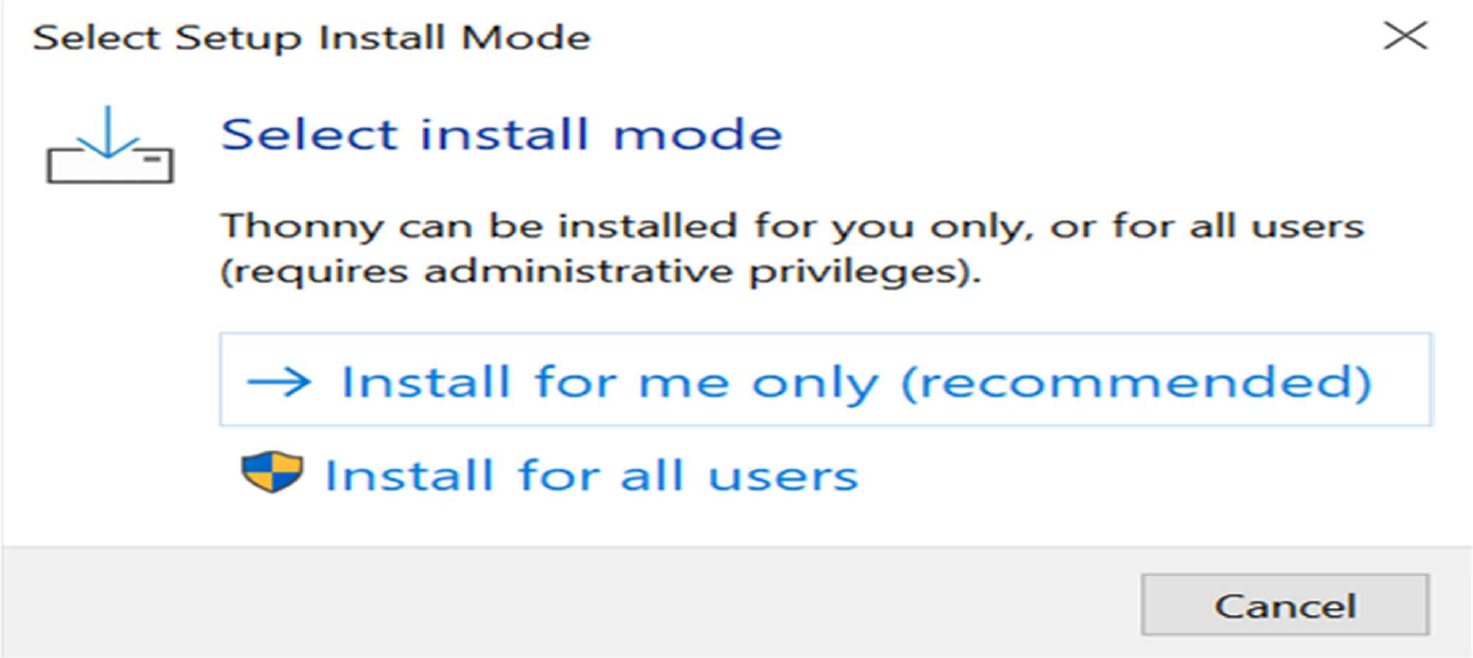
How to install IDE (Thonny)