IT Essentials Lab 5: Computer Network
Introduction
A computer network is a set of interconnected computers and devices designed to share resources, enable communication, and provide access to services. Networks vary in size, scope, and purpose.
Computer Network Devices and Components
Host Devices (End Devices)
Devices that send and receive information, such as computers and printers.
Intermediary Devices
Devices that facilitate communication between host devices, such as:
- Modem
- Switch
- Access Point
- Router
- Firewall
Network Media
The physical components over which messages travel from source to destination.
Intermediary Devices
Modem
- Modem stands for Modulation / Demodulation
- Connects to the Internet via an ISP.
- Converts digital data to analog signals for phone lines (Modulation/Demodulation).
- Types: Internal (expansion slots) and External (serial/USB).
Switch
- Connects network devices (e.g., computers, printers) for data exchange.
Access Point (AP)
- Extends access to a wireless network within a limited range.
Router
- Connects two or more packet-switched networks or sub networks.
- Connects and manages traffic between multiple networks by forwarding data packets to their intended IP addresses.
- Allows multiple devices to share a single Internet connection.
Firewall
- Protects networks from unauthorized access using Access Control Lists (ACLs) (rules) to allow or deny data.
Network
A network involves two or more interconnected devices sharing resources and information.
- Downloading: Receiving information from a network.
- Uploading: Sending information over a network.
Types of Networks
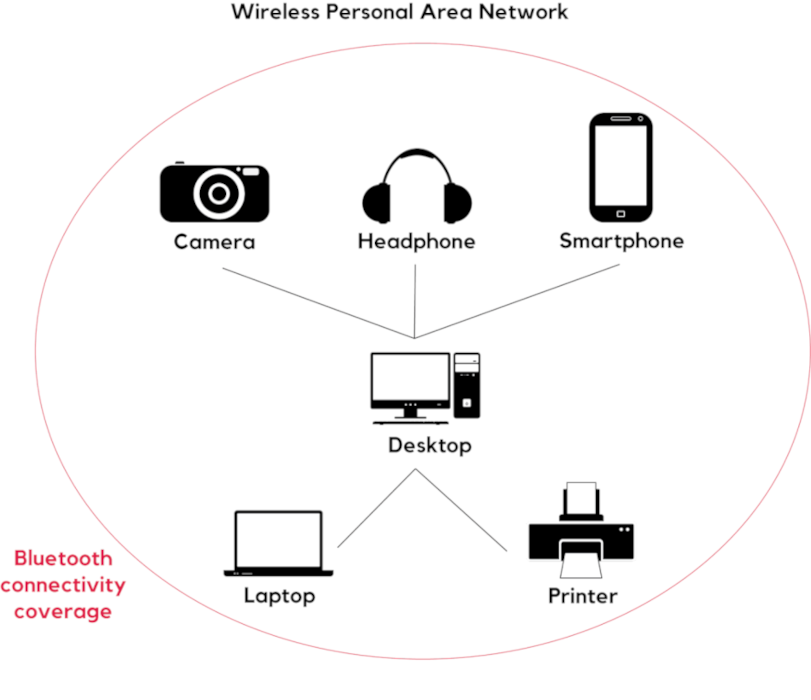
Personal Area Network (PAN)
- A personal network (used by one person) for connecting devices like laptops and scanners.
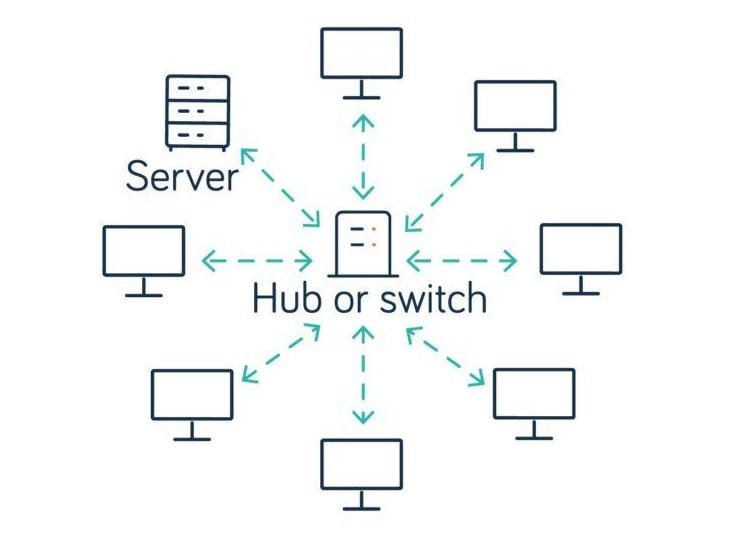
Local Area Network (LAN)
- Covers a limited geographical area (e.g., offices, schools).
Wireless Local Area Network (WLAN)
- Wireless devices connected to access points within a specified area.
Metropolitan Area Network (MAN)
- Spans across a city or a large urban area.
Wide Area Network (WAN)
- Covers large geographical areas, such as cities, states, or countries.
LAN Physical Topologies
Defines the physical connection of devices in a network.
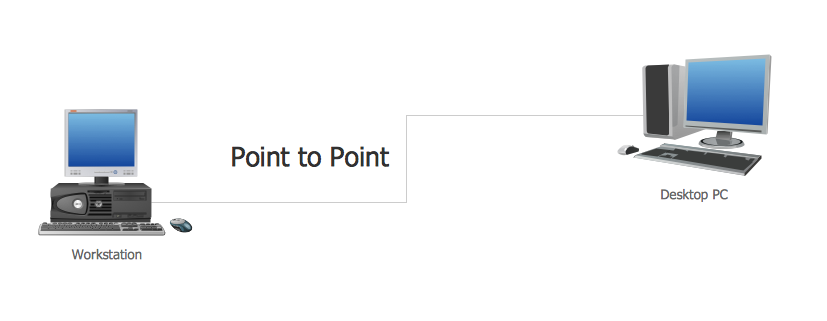
Point-to-Point
- A direct link between two nodes.
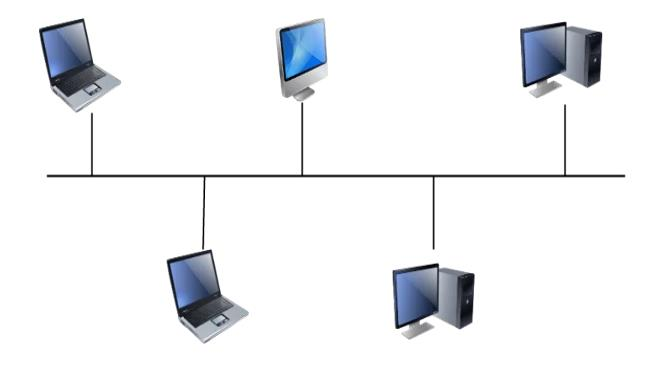
Bus Topology
- Devices share a common cable with terminators at each end to prevent signal reflections and network errors.
- Only one device transmits at a time to avoid collisions.
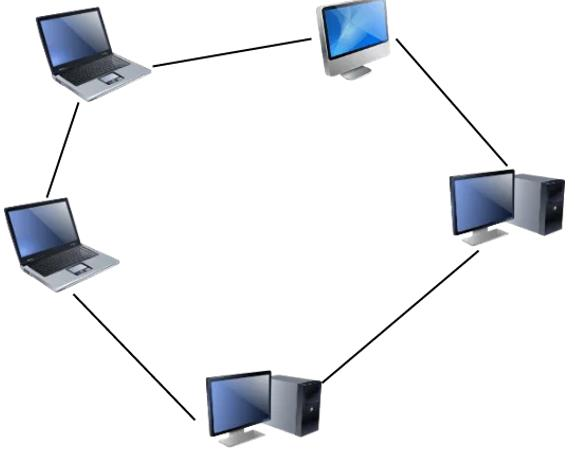
Ring Topology
- Devices are connected in a circular layout.
- A token circulates to control data transmission.
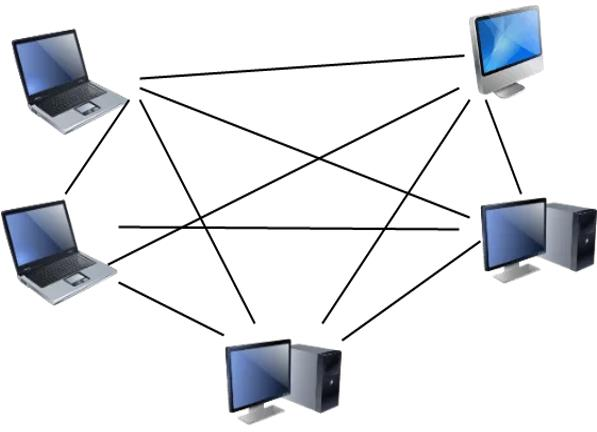
Mesh Topology
- Every device connects to every other device.
- Common in WANs and the Internet.
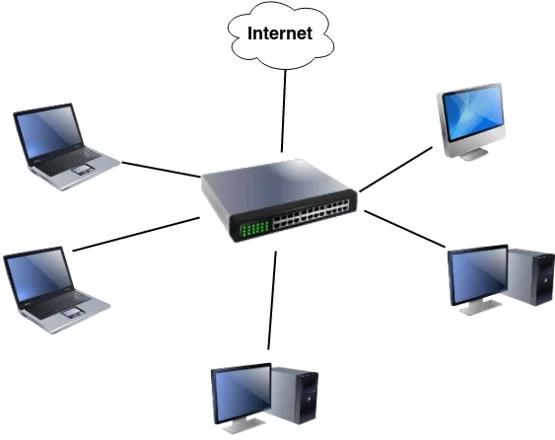
Star Topology
- Central connection point (hub, switch, or router).
- Simplifies troubleshooting as each device connects independently to the central hub.
Computer Network Architecture
Peer-to-Peer Networks
- No dedicated servers.
- No central administration or security.
- Each computer decides which resources to share.
Client-Server Networks
- Centralized server manages resources and security.
- Features centralized storage and secure access to confidential data.
- Requires regular backups for critical data.
Client-Server vs. Peer-to-Peer Networks
| Feature | Peer-to-Peer | Client-Server |
|---|---|---|
| Administration | No central administration | Centralized management |
| Resource Sharing | Each computer shares individually | Controlled by the server |
| Security | Minimal, Not centrally controlled | Strong centralized security |
| Storage | Distributed storage across computers | Central backing store accessible to all |
| Backup | Must be done separately on each computer | Done centrally on the server |
| Scalability | Limited scalability | Supports hundreds/thousands of users |
| Setup | Easy to set up, best for small setups | More complex, suited for large organizations |
Reference Models
Organizations, such as IEEE, IETF, and ISO, develop open standards for networks so that any client running any operating system can access network resources.
OSI Model and TCP/IP Model
Both models describe the process of data communication:
- OSI Model: A theoretical framework for network communication.
- TCP/IP Model: Practical implementation for Internet protocols.
Encapsulation Process: Data is passed through layers, with protocol information added at each level.