Introduction to Cybersecurity Lecture 1
What's Cybersecurity
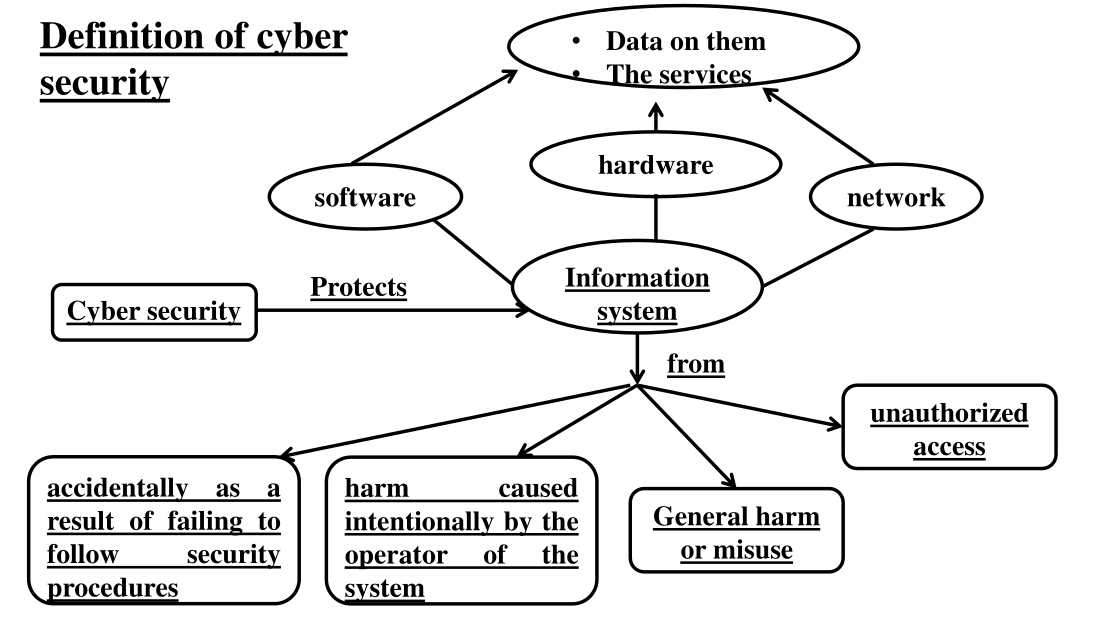
Cybersecurity is the protection of information systems (hardware, software, and network), the data on them, and the services they provide, from these items:
- Unauthorized access
- General harm or misuse
- Harm caused intentionally by the operator of the system
- Accidentally as a result of failing to follow security procedures.
The History of Cybersecurity
1970s: ARPANET and the Creeper
In the 1970s, cybersecurity emerged with the creation of the Creeper program by Bob Thomas, which could move across ARPANET, leaving a trail behind. Ray Tomlinson, who invented email, developed Reaper, a program designed to chase and delete Creeper. Reaper became the first example of antivirus software and the first self-replicating program, marking it as the first computer worm.
1980s: Birth of the commercial antivirus
In 1987, commercial antivirus software emerged with several competing claims for the first product. Andreas Lüning and Kai Figge developed an antivirus for the Atari ST, along with the release of Ultimate Virus Killer. Meanwhile, three Czechoslovakians introduced the first version of the NOD antivirus. In the US, John McAfee founded McAfee Antivirus and launched VirusScan, marking a significant step in the evolution of cybersecurity.
1990s: The world goes online
As the internet became accessible to the public, more personal information was shared online, attracting organized crime to steal data from individuals and governments. By the mid-1990s, the rise in network security threats led to a surge in the production of firewalls and antivirus software to protect users on a large scale.
2000s: Threats diversify and multiply
In the early 2000s, crime organizations began heavily funding professional cyber-attacks, prompting governments to impose stricter penalties for hacking. As the internet expanded, information security advanced, but viruses continued to evolve alongside it.
2021: The next generation
The cybersecurity industry is rapidly expanding, with the global market expected to grow significantly by 2026. Ransomware remains one of the most prevalent threats to organizational data security and is projected to continue increasing.
The importance of cybersecurity
The Growing Threat of Cyber Attacks
In today's digital age, cybersecurity is crucial as a single breach can expose millions of people's personal information, causing financial losses and eroding customer trust. Hence, cybersecurity is essential to protect businesses and individuals from spammers and cybercriminals.
Types of Data Protected by Cybersecurity
Cybersecurity protects various types of data, including:
- Sensitive Information
- Personally Identifiable Information (PII)
- Protected Health Information (PHI)
- Intellectual Property
- Governmental Data
- Industry Information Systems
Without a robust cybersecurity program, organizations become vulnerable to breaches, making them prime targets for cybercriminals.
Rising Risks and Challenges
The risk of successful cyber attacks and data breaches is rising due to widespread poor cloud service configurations and increasingly sophisticated cybercriminals. Business leaders can no longer rely solely on basic cybersecurity solutions like antivirus software and firewalls, as cybercriminals are adapting their tactics to overcome conventional defenses. Comprehensive coverage of all cybersecurity aspects is essential for protection.
Additionally, both inherent and residual risks are growing due to global connectivity and the use of cloud services, such as Amazon Web Services (AWS), for storing sensitive data.
The Impact of Digital Transformation
As organizations increasingly adopt digital transformation, the risk of cybercrime is rising rapidly, making IT infrastructure crucial for defense against cyberattacks. Data breaches now affect all industries, not just highly regulated sectors like healthcare, and even small businesses face the risk of severe reputational damage.
Investment in Cybersecurity
Businesses, individuals, and governments are heavily investing in cybersecurity to protect assets and data from hackers. To thrive in today's competitive environment, businesses need the right cybersecurity tools and strategies.